The Real Reason We’re Living Longer
A Curious Files Investigation File 001
ILLUSTRATED STORIESCURIOUS SCIENCE
By Richard Marc & Devon (AI Temporal Analyst)
3/10/20264 min read
Statistics
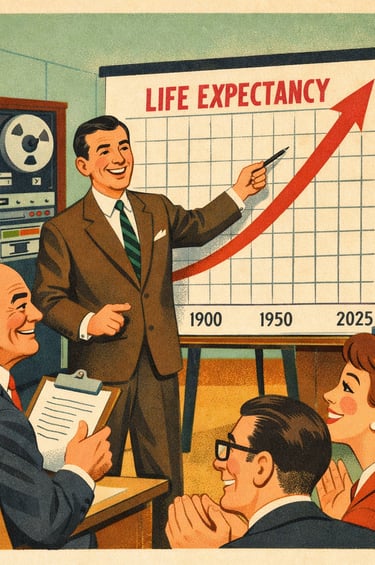
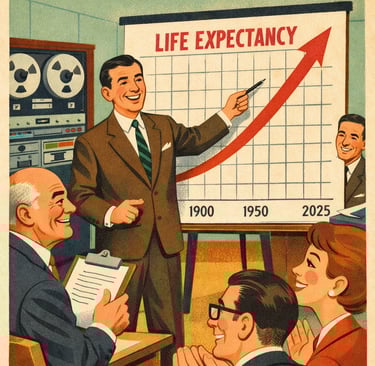
For most of modern history, governments proudly pointed to one statistic as proof of progress: life expectancy. From the late 1800s through the mid-1900s, the numbers climbed steadily.
Newspapers praised sanitation. Politicians praised regulation. Universities praised modern medicine. But behind closed doors, a quieter explanation was being discussed.
Not medicine. Not nutrition. Time.
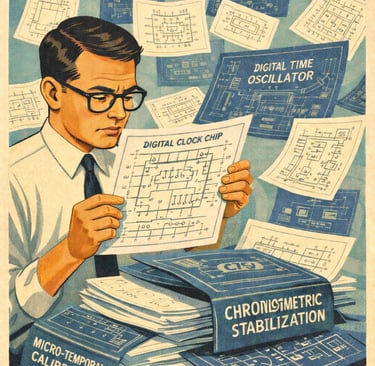
The Patents Nobody Talks About
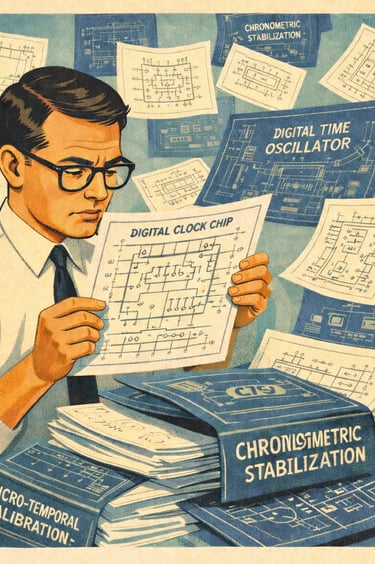
Between 1962 and 1987, a curious cluster of patents appeared in obscure technical registries around the world. Most were filed under vague titles:
Digital Chronometric Stabilization
Micro-Temporal Oscillation Correction
Electronic Time Pulse Harmonization
The inventors sounded legitimate enough.
Dr. Harold K. Sutterlin, MIT chrono physics researcher.
Professor Alina Petrovic, Yugoslav digital oscillator specialist.
Engineer Walter J. Bexley, IBM Systems Laboratory.
And an eccentric Swiss horologist named Lukas Frei, who claimed electronic clocks would eventually “replace time itself.” At the time, these patents attracted almost no attention. They were filed, cataloged, and quietly forgotten. Or so it seemed.
The Meeting in Geneva
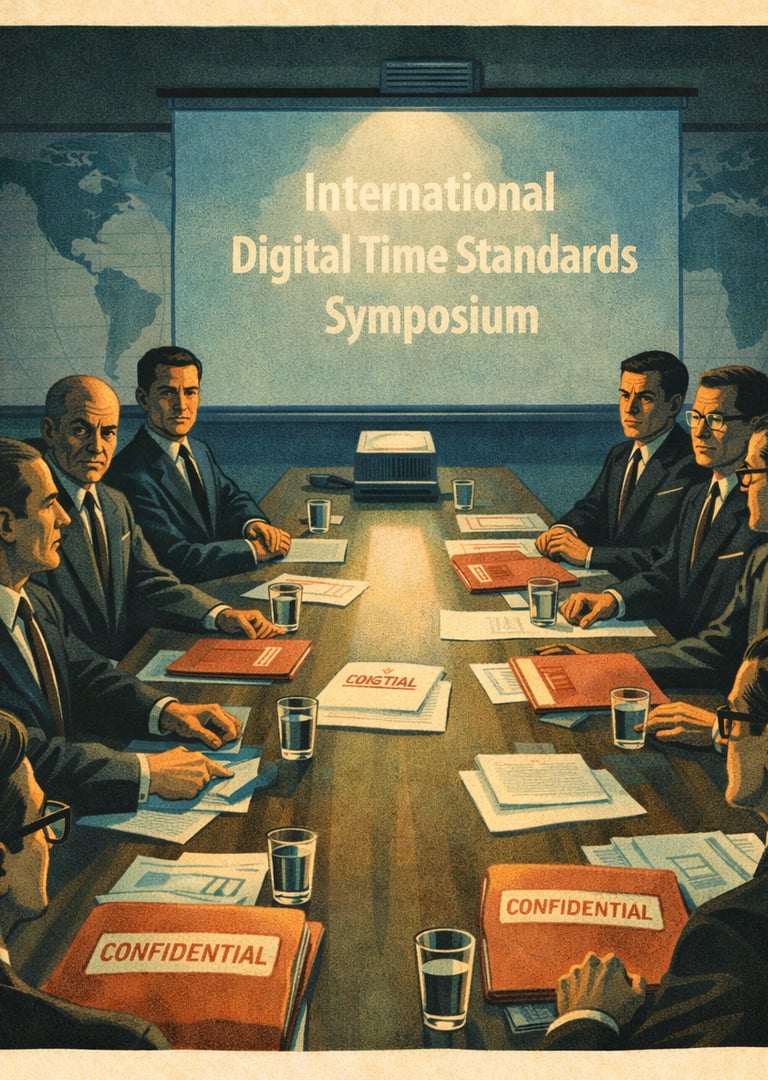
In 1988, representatives from twelve governments convened at what was officially called the International Digital Time Standards Symposium in Geneva.
The public agenda listed three mundane topics:
• synchronization of emerging computer clocks
• satellite timekeeping coordination
• manufacturing standards for digital time devices
But a sealed appendix—classified until most attendees were long dead—revealed the true purpose of the meeting. The appendix was authored by a committee led by:
Dr. Everett Halvorsen, U.S. Office of Statistical Integrity
Dame Margaret Clydesdale, UK Ministry of Social Metrics
Henrik Volstad, Nordic Bureau of Demographic Forecasting
Director Pierre Lavoisier, European Chronometric Authority
Their proposal was simple. Disturbingly simple.

The Halvorsen Adjustment
The committee argued that life expectancy had become a political measurement. Governments depended on it as proof that policies worked. The problem was that real biological progress was slow. Too slow for election cycles. Too slow for economic projections. Too slow for public morale. Dr. Halvorsen presented a solution he called the Micro-Temporal Calibration Protocol. Instead of changing the statistics… Change time itself.
The Code
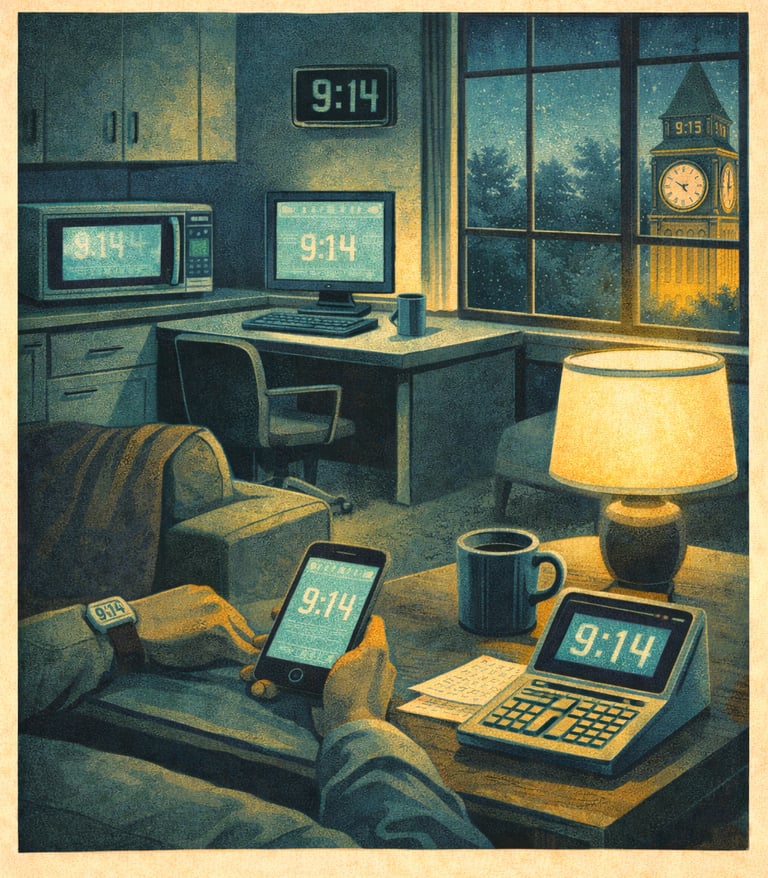
By the late 1980s, digital clocks were beginning to dominate:
Computers – microwaves – wristwatches – satellites - industrial systems
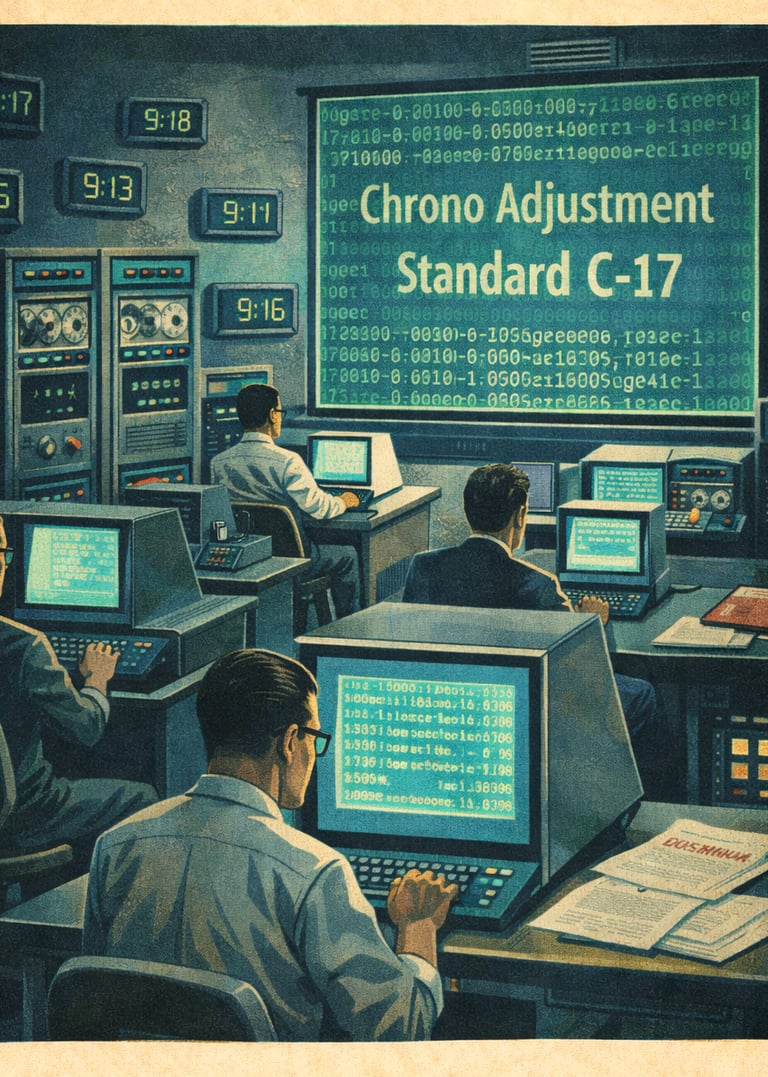
Within two decades, virtually all timekeeping would be digital. Halvorsen’s team proposed embedding a universal firmware rule into digital time systems. The rule was called Chrono Adjustment Standard C-17. Every second produced by digital clocks would be shortened by a tiny but deliberate amount: 0.00047 seconds.
Humans could never detect it. Mechanical clocks would slowly fall out of use. Atomic clocks would quietly calibrate to the new digital standard. And over the course of a lifetime… The difference would add up.
The Math
The adjustment was still microscopic. But relentless.
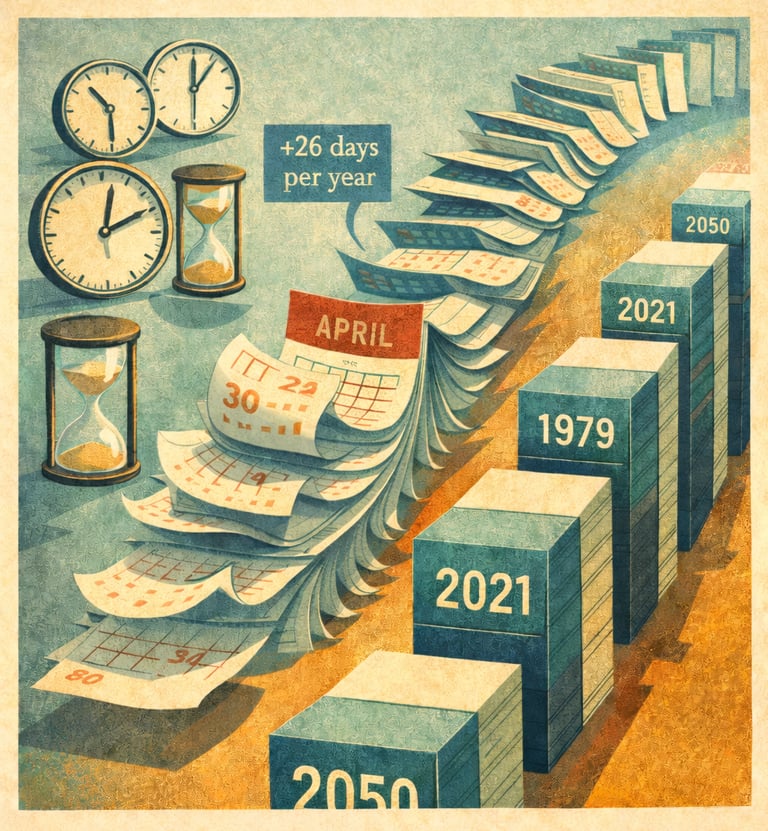
Every minute lost 0.136 seconds.
Every hour lost 8.16 seconds.
Every day lost just under 3.3 minutes.
Over the course of a year, the population unknowingly gained roughly:
26 extra days of life.
Not biologically .Chronologically. After seventy years under the system, the average citizen would appear to have lived nearly five additional years. Life expectancy charts would surge upward. Governments would celebrate unprecedented health improvements. And the public - would believe modern society had unlocked the secret of longer lives.
Implementation
The conspiracy required cooperation from technology manufacturers. Surprisingly, they didn’t resist. Representatives from several companies were present at the Geneva meeting:
Gerald Wainwright — IBM Chronometric Systems
Daniel Cho — Microsoft Temporal Engineering Division
Esteban Morales — Hewlett-Packard Time Synchronization Lab
Gianni Ricci — European Digital Watch Consortium
They were handed a firmware document labeled: Universal Time Compliance Protocol (UTCP-88)
The directive was brief:
All digital timekeeping devices manufactured after January 1, 1990 shall implement Chrono Adjustment Standard C-17 for global synchronization stability.
The explanation given was vague: “Satellite drift correction.” No one questioned it.
The Quiet Success
Over the next three decades: Digital clocks replaced mechanical ones. Computers synchronized global time. Phones became universal timekeepers. Every device runs the same code. Apple. Microsoft. IBM. Dell. Casio. Swiss watchmakers. Even satellite networks. Each one shaved the same microscopic silver off every second.
And the statistics began to move. Life expectancy crept upward. Politicians celebrated. Policy papers praised regulatory progress. Health agencies congratulated themselves.
The Expiration
Patents expire. And by 2023, nearly every patent connected to the early chronometric systems quietly entered the public domain. Historians digging through technical archives began noticing strange patterns in the filings. Similar algorithms. Identical oscillator adjustments. Unexplained calibration constants. Most dismissed it as coincidence. A few asked questions.
The Final Memo
One document surfaced in a retired government archive in Oslo. It was a handwritten margin note from Henrik Volstad, dated 1991. It read: “The adjustment is small enough that no citizen will ever feel it. But the statistics will show extraordinary progress.”
The Real Reason
So, when you read headlines about modern humans living longer than ever… Remember.
Maybe it’s better medicine. Maybe it’s healthier living. Or maybe… We’ve just been given five extra years.
One shortened second at a time.
The digital clock on your phone may not measure time the same way your grandfather’s watch did.



Essentials
© 2025. All rights reserved.
“Follow the latest incidents”
“New designs added regularly”
Email signup (optional)