
Where Do the Missing Eight Minutes Go
A Curious Files Investigation File 003
ILLUSTRATED STORIESCURIOUS SCIENCE
By Richard Marc & Devon (AI Archive Assistant)
3/20/20265 min read
The Question That Wouldn’t Go Away
Papa closed the journal slowly.
The kitchen was quiet except for the soft hum of the microwave clock.
7:11 PM.
Darla, the tuxedo cat, sat on the counter watching him with the kind of calm suspicion only cats possess.
Papa tapped his pencil against the table.
Eight minutes.
Every day.
Gone.
Scientists had explanations for many strange things — black holes, quantum particles, the bending of space itself — but no textbook seemed eager to discuss the quiet disappearance of eight minutes from human experience.
Papa adjusted his glasses.
If the minutes were truly missing…
Then there remained only one real question.
Where do they go?
The Closed Meeting
Papa eventually found a clue buried deep inside an old research archive. The document was not a published paper; It was a meeting transcript.
The heading read:
Temporal Stability Advisory Session
Geneva – October 1997
The list of attendees was unusual. Not just physicists and neurologists.
Also present were:
• a government policy advisor
• a chronobiologist
• a theologian
• and several specialists whose research dealt with the measurement and perception of time.
One name appeared repeatedly throughout the discussion.
Dr. Valerie Deluban
Temporal Systems Analyst.
Dr. Deluban’s Observation, according to the transcript, the meeting had been called to address a growing concern.
Certain experimental timekeeping systems had begun detecting a daily anomaly where exactly eight minutes of measurable time appeared to vanish from human experience.
The minutes were not slowing.
They were not stretching.
They were simply…
absent.
The First Question
For several moments, no one spoke. The question lingered over the table. If eight minutes were being removed from every single day, where did those minutes go?
A physicist near the end of the table flipped through a stack of reports. “We’ve tracked the loss across multiple synchronized systems,” he said. “Atomic clocks, satellite timing arrays, even independent laboratory measurements.”
He looked up.
“The minutes aren’t redistributed within the observable timeline.”
Another researcher leaned forward. “We considered measurement error,” she said, “But the consistency is too precise.”
“Eight minutes,” someone else murmured. “Every day. No deviation.”
Dr. Deluban finally spoke again.
“We are not observing a drift,” she said.
“We are observing a removal.”
The room fell silent.
“Then where do they go?” The government advisor asked?
Valerie paused before answering.
“We don’t know.” She let the words settle. “But we do know this.” She tapped the table lightly. “They are not gone.”
The Three Proposals
The transcript revealed that the group had spent hours debating what should be done with the missing time.
Three proposals eventually emerged.
Proposal One — The Longevity Allocation
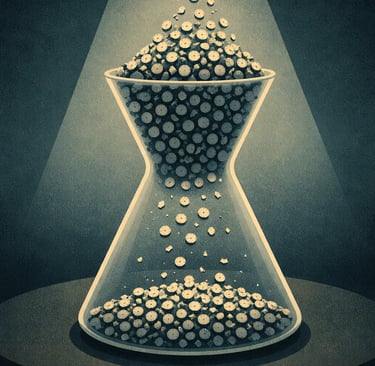
A biostatistician argued that the missing minutes should be redistributed. The minutes could be quietly transferred to individuals whose work benefited humanity.
Scientists.
Doctors.
Researchers.
Those who needed more time to finish important discoveries.
“Eight minutes per day across billions of people,” the biostatistician explained. “That becomes an enormous reserve of time.”
He tapped a pencil against the table. “Enough to extend certain lives indefinitely.” The idea produced murmurs around the room.
Dr. Deluban made a small note beside the proposal.
Proposal Two — The Temporal Reserve
A government advisor offered a different suggestion.
The minutes should be stored.
Held in reserve. A kind of temporal emergency supply.
In moments of catastrophe — accidents, disasters, system failures — those stored minutes could be quietly released.
Just enough time for a plane to regain altitude. Just enough time for a driver to react. Just enough time to prevent tragedy.
The advisor called it:
The Temporal Reserve
Several members of the meeting nodded thoughtfully.
Valerie’s Decision
Dr. Deluban listened to the arguments carefully.
When the discussion ended, the meeting turned to her.
“Which option should we implement?” someone asked.
Valerie studied the notes spread across the table.
The longevity plan
The temporal reserve
The containment protocol
She tapped her pen once against the page. Then she closed the folder.
“The purpose of the adjustment,” she said quietly, “was never to redistribute time.”
The room waited.
“It was simply to remove it.”
A few of the scientists exchanged uneasy glances.
One of them finally asked the question no one had voiced aloud. “What happens to the minutes after they’re removed?”
Valerie looked around the table. For a moment, she didn’t answer.
Then she said: “We haven’t found them yet,” “But based on the data…”
She closed the folder.
“They accumulate.”
Papa’s Conclusion
Papa reread the transcript twice. Then a third time.
The microwave clock now reads 7:22 PM.
Darla stretched lazily on the counter.
Papa leaned back in his chair.
Eight minutes every day. Removed.
Accumulating somewhere.
Papa tapped the pencil against the journal and wrote one final note in the margin. “If eight minutes disappear every day…”
He paused. Then he finished the thought. “…someone must be keeping them.” Papa glanced at the clock once more. The seconds continued ticking calmly forward. But Papa was no longer entirely certain that time was moving in only one direction.
Papa’s Reality Check
Papa adjusts his glasses and clears his throat. “This story is speculative fiction. No confirmed evidence exists that eight minutes of every day mysteriously vanish from human experience.”
He glances once more at the clock. “…although if you occasionally feel like you’ve already lived the last few minutes…”
“…you might consider the possibility that you have.”
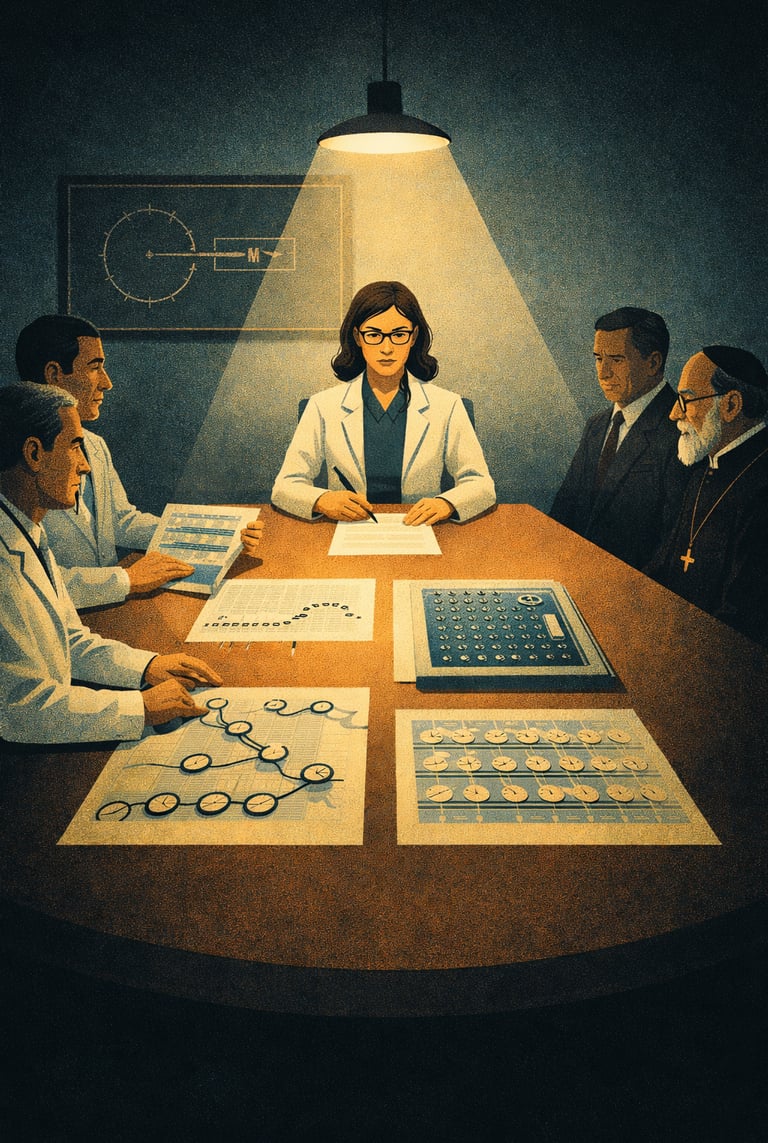

One of the physicists at the table finally asked the obvious question. “If the minutes are removed from the timeline…” “Where do they go?”
The room fell quiet. Dr. Deluban leaned forward and folded her hands.
“That,” she said calmly, “is precisely why we’re here.”


The First Breakthrough
The discussion was stalled. For hours, the group circled the same question. Where did the missing minutes go? No one had an answer.
But near the end of the table, a systems engineer quietly cleared his throat. “We may be asking the wrong question,” he said.
Several heads turned.
“We’ve been trying to determine where the minutes go after they’re removed.” He paused. “But we haven’t considered whether the removal itself can be influenced.”
The room grew still. Dr. Valerie Deluban looked up from her notes.
“Explain,” she said.
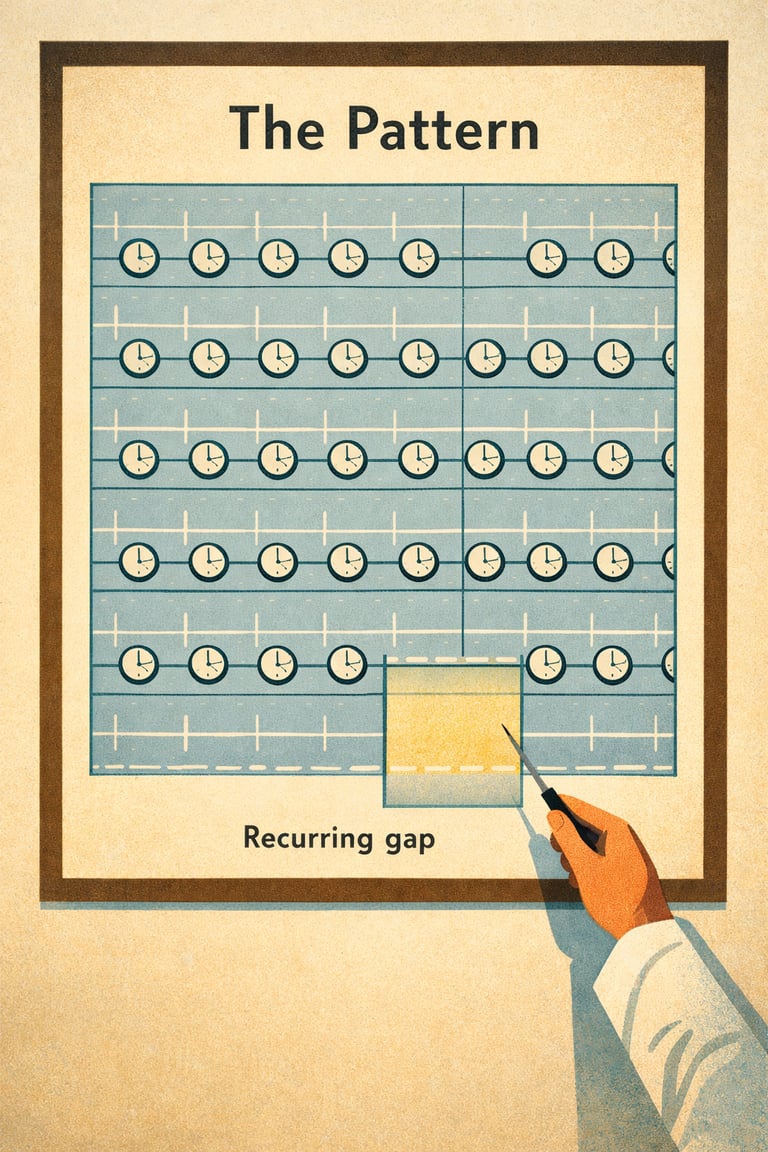
The engineer slid a document across the table. “Our instruments don’t just detect the loss,” he said. “They detect a pattern — a consistent, repeatable interval.” He tapped the page. “Which means the event is not random.”
Valerie studied the data. “Something is causing it,” she said.
“Or controlling it,” the engineer replied.
Silence settled over the room.
“If the removal can be predicted…” Valerie said slowly, “…then it may be possible to influence it.”
No one spoke. The question has changed. They were no longer asking where the minutes went. They were asking:
What could be done with them?
Proposal Three — The Containment Protocol
The final proposal came from a physicist who spoke very little during the discussion.
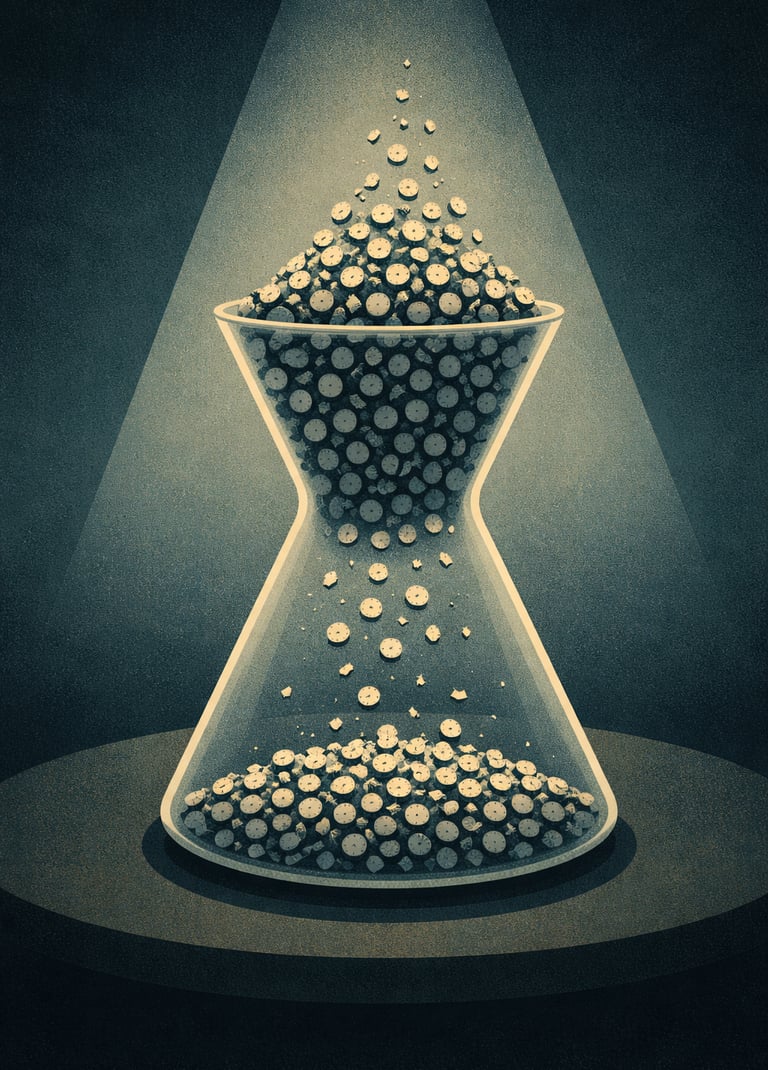
He believed the minutes should not be stored or distributed. They should simply be removed. Deleted.
Certain discoveries, he argued, might destabilize civilization. Certain events could threaten the continuity of the timeline itself.
If necessary, small segments of time could be erased to prevent them.
Eight minutes was small enough to go unnoticed. Large enough to correct dangerous developments.
The physicist referred to this idea as:
Temporal Containment
The room fell silent again.


Essentials
© 2025. All rights reserved.

“Follow the latest incidents”
“New designs added regularly”
Email signup (optional)